The short answer
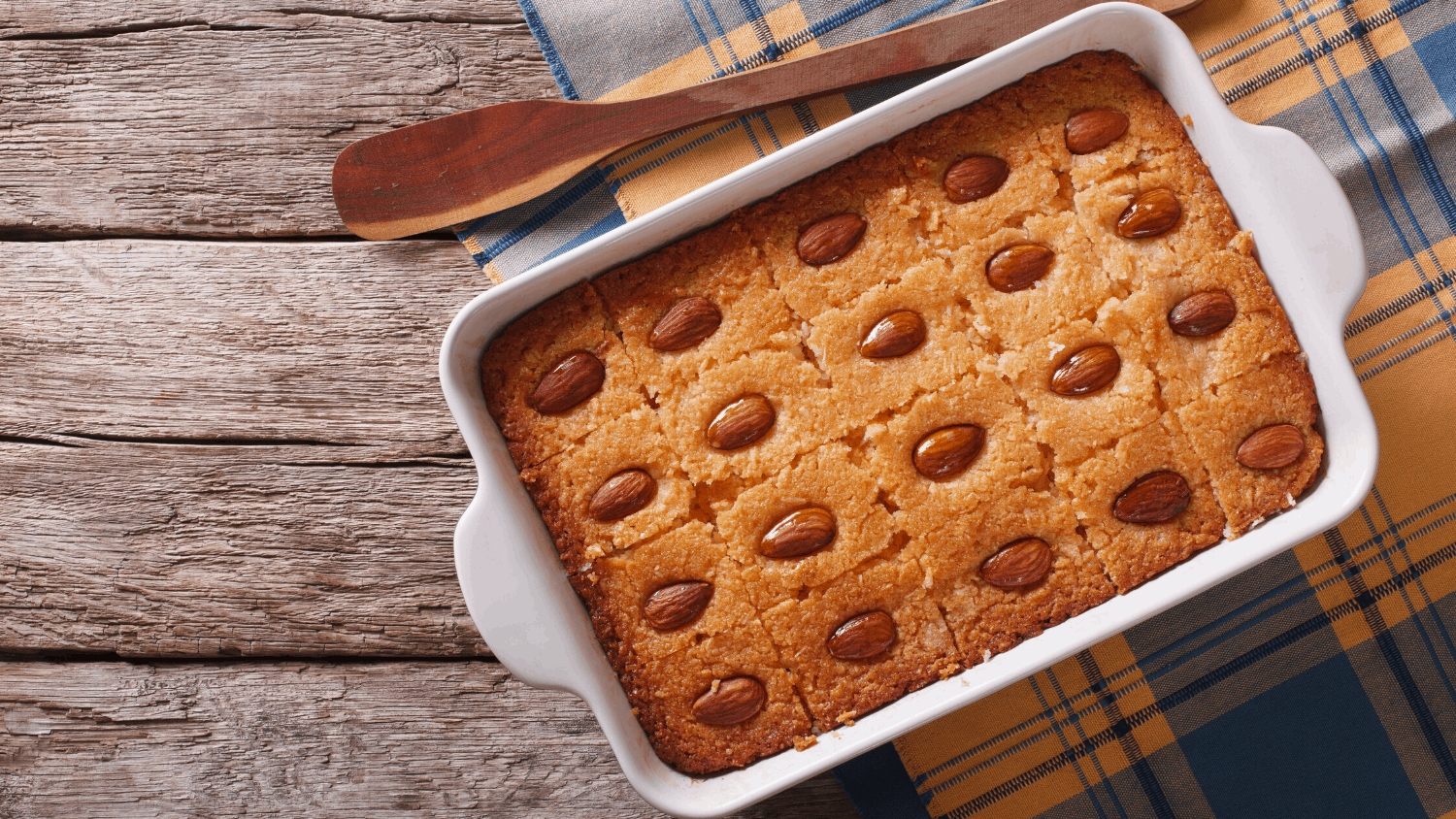
Basbousa (also called hareeseh or namoura) is a semolina cake soaked in sugar syrup flavoured with rose or orange blossom water, cut into diamonds, and topped with almonds. It has Egyptian roots dating to the Ottoman era and is one of the most widespread desserts in the Arab world. The best basbousa in Dubai is found at Al Mallah (Al Dhiyafah Street), Automatic Restaurant (Deira), and Feras Sweets.
Every Arab grandmother makes basbousa. Every Arab grandmother makes it differently. Every Arab grandmother insists hers is correct.
This is the fundamental truth of basbousa — a semolina cake soaked in sugar syrup that is simultaneously the simplest and most argued-about dessert in the Arab world. In Egypt, it's basbousa. In Lebanon and Syria, it's namoura or hareeseh. In Turkey, it's revani. In Greece, ravani. Every country claims it. No country owns it.
The History Nobody Agrees On
Basbousa's origins are tangled in the Ottoman Empire, where semolina-based sweets were foundational to palace and street cuisine alike. The Ottomans — who controlled Egypt, the Levant, and the Arabian Peninsula for four centuries — spread semolina cakes across their territory the way the British spread tea.
What's clear is that Egypt made basbousa its own. By the 19th century, basbousa was the default celebration sweet in Egyptian households — served at weddings, births, religious holidays, and funerals. The recipe is deceptively simple: coarse semolina, yoghurt, sugar, butter, baking powder. Mixed. Baked. Soaked in syrup while still hot.
The syrup is what separates mediocre basbousa from transcendent basbousa. Too little syrup and the cake is dry, crumbly, forgettable. Too much and it collapses into sweet mush. The perfect basbousa absorbs just enough syrup to be moist throughout — glistening on the surface, yielding to a fork, but holding its diamond shape when lifted.
The Regional Wars
The basbousa debates across the Arab world are real, passionate, and unsolvable:
- ◆Egypt: Basbousa should be dense, heavily syruped, topped with a single blanched almond per diamond. Yoghurt in the batter is non-negotiable. Rose water in the syrup is traditional; orange blossom is an acceptable variant.
- ◆Lebanon/Syria (namoura): Lighter texture. Tahini is brushed on the baking tray. Orange blossom syrup only — rose water is "Egyptian." A clotted cream (ashta) filling is sometimes layered inside.
- ◆Palestine (hareeseh): Coconut is added to the batter. The texture is coarser. Served at every funeral as a gesture of communal support.
- ◆Gulf: The Emirati and Saudi versions often include saffron in the batter and date syrup alongside or instead of sugar syrup.
Where to Find the Best Basbousa in Dubai
Al Mallah — Al Dhiyafah Street, Satwa
Al Mallah is a Satwa institution — a Lebanese street-food counter that has been serving shawarma, falafel, and basbousa since the 1990s. Their basbousa is the namoura style: lighter, with a faint tahini note from the greased tray, soaked in orange blossom syrup. Cut into generous diamonds. AED 5-8 per piece.
Insider tip: Order basbousa alongside their fresh mango juice. The pairing — floral syrup against cold fruit — is a Satwa classic.
Automatic Restaurant — Deira
Automatic is a Lebanese chain that has been in Dubai since the early 2000s, but its Deira branch retains the feel of a neighbourhood bakery. Their basbousa is made in large trays and sold by weight — AED 20-30 per kilo. The texture leans Egyptian: dense, heavily syruped, with almonds pressed into each diamond before baking.
Feras Sweets — Al Rigga, Deira
Yes, Feras again. Their basbousa sits in the display case beside the kunafa trays, often overlooked by tourists heading straight for the cheese-pull spectacle. That's a mistake. Feras' basbousa uses a house recipe with a hint of coconut — a Palestinian influence — and the syrup is infused with both rose and orange blossom water. AED 6-10 per piece.
Home Bakeries (Instagram)
Some of the best basbousa in Dubai comes from home bakers — Egyptian and Palestinian women who sell through Instagram and WhatsApp. Search #basbousadubai or #homemadesweets on Instagram and you'll find dozens of accounts selling trays for AED 40-80, delivered to your door. The quality is often superior to anything in a shop, because these are family recipes made in small batches with actual care.
Why Basbousa Endures
Basbousa endures because it asks for almost nothing. The ingredients are cheap. The technique is forgiving. A twelve-year-old can make passable basbousa on their first attempt. And yet the ceiling is high — a truly great basbousa, with perfectly calibrated syrup absorption and a golden crust that cracks under a fork, is a small masterpiece.
It is the dessert of the people. Always has been. In Dubai, where the food scene often trends toward spectacle and exclusivity, basbousa is a reminder that the best things are the ones everyone can afford.
"You can tell how an Arab family is doing by their basbousa. If it's dry, something is wrong." — Egyptian grandmother, Deira