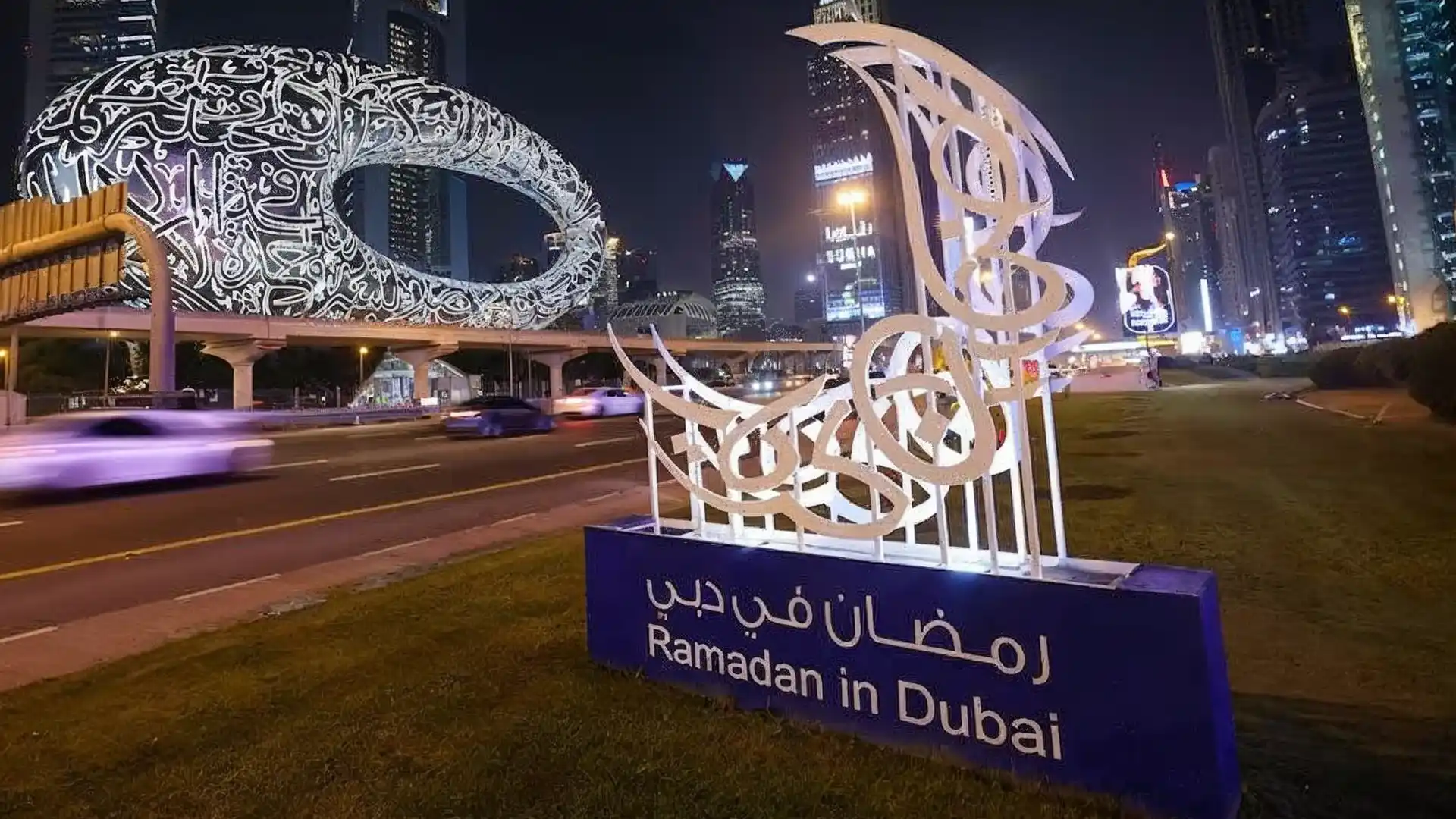
The short answer
During Ramadan in Dubai, visitors should avoid eating, drinking, and smoking in public during daylight hours (though hotels serve meals behind screens). Dress modestly — cover shoulders and knees in public areas. Music is toned down. Alcohol is available at hotels after iftar. The city is welcoming to tourists; basic respect is all that's expected.
You can eat during Ramadan in Dubai. But here's why most visitors choose not to.
It's not the law that stops them — though technically, eating in public during fasting hours is a fineable offence. It's the atmosphere. When 2.3 million people around you are abstaining from food and water from dawn to dusk, something shifts in your own behaviour. You become more considerate. More aware. More human.
That's Ramadan's quiet power. And it's what makes Dubai during the holy month so unexpectedly moving for visitors.
The Rules That Actually Apply
Let's separate law from custom from myth.
What you genuinely cannot do:
- ◆Eat, drink, or smoke in public during fasting hours (sunrise to sunset). This applies to streets, parks, beaches, and public transport. Fine: up to AED 2,000.
- ◆Play loud music from car speakers or portable speakers in public areas.
What you can do (that most guides make sound forbidden):
- ◆Eat in hotels. Every hotel restaurant operates during Ramadan, serving behind screens or in dedicated areas.
- ◆Order room service. Available 24/7 as normal.
- ◆Eat in mall food courts. Curtained sections are set up specifically for non-fasting visitors.
- ◆Drink water discreetly if you have a medical condition. Nobody will confront you.
- ◆Drink alcohol at licensed hotel venues after iftar (typically from sunset).
The Dress Code
Dubai's dress expectations tighten slightly during Ramadan, but the shift is subtle. The best rule: dress as you would for a European cathedral. Shoulders covered, knees covered, nothing excessively tight or sheer.
At the beach and pool, wear whatever you like — swimwear is fine. It's the transition zones that matter: walking from the beach to a mall in a bikini top was always frowned upon in Dubai, and during Ramadan, it draws more attention.
For men: Shorts above the knee are fine in tourist areas. In Old Dubai, Deira, or near mosques, longer shorts or trousers are more respectful.
For women: A light scarf in your bag is useful. Not required, but appreciated if you visit a mosque or an iftar event.
Music, Nightlife & Entertainment
This is where Ramadan most visibly changes Dubai's social landscape:
- ◆Clubs are closed for the month.
- ◆Live music in bars and restaurants is reduced or stopped. Some venues switch to acoustic or ambient sets.
- ◆Brunches — Dubai's signature weekend ritual — are paused during Ramadan.
- ◆Shisha is available after iftar at outdoor venues.
What replaces it? Suhoor lounges. These late-night gatherings (10pm-3am) are Ramadan's social scene — atmospheric, relaxed, and far more culturally interesting than any club night.
Greetings & Interactions
If someone says "Ramadan Kareem" to you, respond with "Ramadan Kareem" back or "Khair Mubarak." You'll hear it constantly — from taxi drivers, shopkeepers, hotel staff. It means "generous Ramadan" and it's offered freely regardless of your faith.
The Things Nobody Tells You
- ◆Traffic disappears between 2-5pm. The city naps. It's the best time to visit attractions.
- ◆The 30 minutes before iftar are magical. Streets empty, the call to prayer echoes, and then — simultaneously — the city sits down to eat.
- ◆People are kinder. Ramadan emphasises patience and generosity. Service staff smile more. Strangers are more helpful. Road rage drops measurably.
- ◆Supermarkets are fully stocked. You can buy food and eat in your accommodation anytime.
The One Rule That Matters
Be considerate. That's it. Dubai doesn't expect visitors to fast. It doesn't expect you to know the prayer times. It simply asks that you notice what's happening around you and adjust your volume — literal and metaphorical — accordingly.
Most visitors find this effortless. And most leave Ramadan thinking it was the best trip they ever took.