The short answer
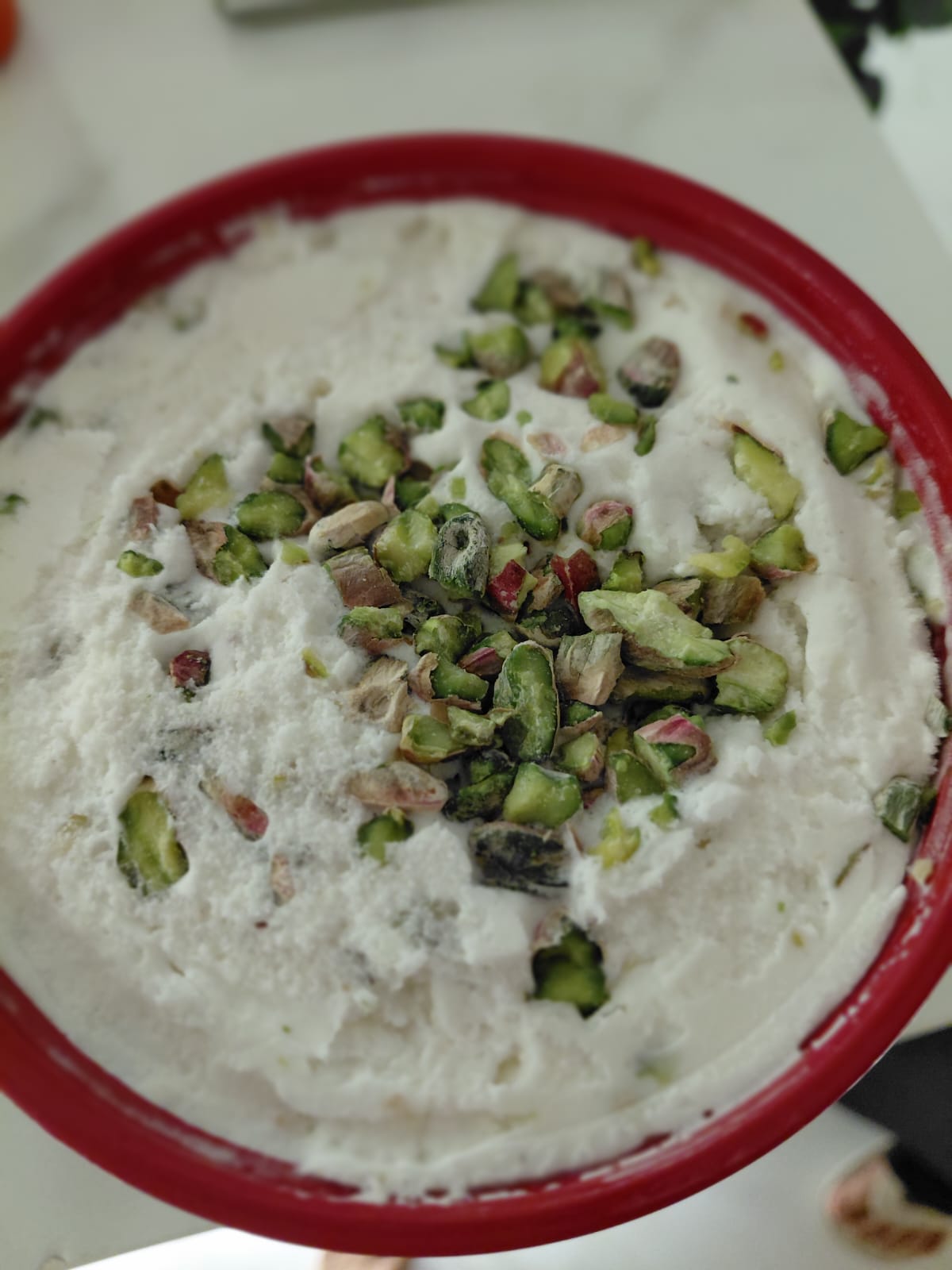
Mastika (also spelled 'Mustka' on menus) is a stretchy, chewy ice cream made with mastic resin from the Greek island of Chios, thickened with sahlab orchid powder, and perfumed with rose water. Unlike gelato, it resists dripping and pulls like mozzarella. In Dubai, find it at Al Halabya Sweets (Deira), Bachir Ice Cream (City Walk), Al Falak Sweets (Sharjah), and Feras Sweets (Al Rigga) — where the move is ordering it on top of hot kunafa.
You pull it. It stretches. It doesn't drip — it *resists*. The texture is closer to mozzarella than dessert, and that's exactly the point.
Welcome to mastika — the ice cream that predates everything in your freezer by about four centuries.
A Resin From a Single Island
The ingredient that makes mastika impossible to imitate is mastic resin — a translucent, tear-shaped sap harvested from Pistacia lentiscus trees that grow almost exclusively on the southern coast of Chios, a Greek island in the Aegean. The trees are scored with small incisions, and the resin weeps out slowly, hardening into crystalline droplets that locals call "the tears of Chios."
This resin has been traded across the Mediterranean since antiquity. The Ottomans prized it so highly they called Chios the "mastic island" and taxed its harvest at imperial rates. When Ottoman kitchens spread across the Levant — from Istanbul to Damascus to Beirut — mastic went with them. It ended up in ice cream, puddings, and chewing gum (the word "masticare" shares the same root).
How Mastika Ice Cream Is Made
Traditional mastika ice cream uses four key ingredients:
- ◆Mastic resin — pounded into fine powder and dissolved into the milk base. This is what creates the signature stretch and chew.
- ◆Sahlab (salep) — a flour made from dried orchid tubers. It acts as a natural thickener, giving the ice cream its dense, elastic body. Real sahlab is expensive; many modern shops use cornstarch substitutes.
- ◆Rose water — added in small amounts for a floral top note that balances the earthy resin.
- ◆Whole milk and sugar — the base, churned slowly and often pounded with long-handled paddles in the traditional method.
The result is an ice cream that behaves unlike any Western frozen dessert. It doesn't melt into a puddle — it softens into a pliable, taffy-like mass. Street vendors in Damascus and Beirut famously stretch it between two paddles, pulling it into long ropes before folding it back into cones.
In Dubai, the best mastika isn't hidden. It's sitting in a refrigerated case in a Deira sweet shop, waiting for someone to ask for "Mustka."
The Naming Confusion
Walk into Al Halabya Sweets in Deira and scan the menu. You won't find "Mastika." You'll find "Mustka" — the colloquial Arabic transliteration that drops a syllable. On delivery apps, you might also see "Mistika," "Moustika," or simply "Arabic stretchy ice cream."
They're all the same thing. The spelling changes with dialect: Syrian shops tend toward "Mustka," Lebanese shops sometimes use "Mastic Ice Cream" for English menus, and Turkish establishments call it "Dondurma" (which technically refers to any Turkish ice cream, though the mastic-based version is the original).
The rule: If an Arabic sweet shop has a white, stretchy ice cream buried under green pistachios, that's mastika. Order it regardless of what the label says.
Where to Find the Best Mastika in Dubai
Al Halabya Sweets — Deira
The benchmark. This Aleppo-heritage sweet shop on Al Muteena Street has been serving mastika for over a decade. Their version uses real mastic resin and sahlab — you can tell because the stretch is genuine (cornstarch versions snap instead of pull). A single scoop costs AED 12-15, served in a cup with a aggressive pile of crushed pistachios. They also do a mastika sandwich between two wafers that's unreasonably good.
Insider tip: Ask for the "mix" — half mastika, half ashta (clotted cream). The contrast between the chew and the silk is remarkable.
Bachir Ice Cream — City Walk
Bachir is a Beirut institution that brought its mastika game to Dubai. Their version leans slightly sweeter than Al Halabya's, with a more pronounced rose water note. The presentation is modern — clean cups, Instagram-friendly pistachio dust — but the technique is traditional. A scoop runs AED 18-22.
Best order: The "Royal Ashta" — mastika ice cream layered with ashta cream and drizzled with orange blossom syrup.
Al Falak Sweets — Sharjah
Worth the drive. Al Falak operates from a modest shopfront in Sharjah's Al Majaz area, and their mastika is the chewiest of the three — almost aggressively elastic. If you want the most traditional, least sweetened version, this is it. Prices are the lowest too: AED 8-12 per serving.
Feras Sweets — Al Rigga, Deira
A Nabulsi institution. Feras has been a pilgrimage site for Palestinian sweets lovers in Dubai for years, but the move here is their kunafa-mastika combo — a slab of hot, freshly pressed kunafa with a scoop of cold mastika dropped on top. The temperature contrast is violent in the best way: molten cheese and syrup against cold, stretchy resin ice cream. AED 20-25 for the combo. They also do a straight mastika scoop if you want it solo, but you'd be missing the point.
Insider tip: Go after 8 PM when the kunafa trays are freshest. Ask for "kunafa with Mustka on top" — they know exactly what you mean.
Nablus Sweets — Multiple Locations
The Palestinian heritage chain with branches across Dubai and Sharjah. Their knafeh naameh (the soft, fine-semolina style) is already legendary, but pair it with their house mastika and you get the definitive version of the combo. The mastika here leans slightly less sweet than Al Halabya's, which makes it a better foil for the syrup-drenched kunafa. AED 15-20 for the ice cream; the kunafa combo varies by branch.
The Kunafa-Mastika Combo
If there's a single dessert hack Dubai has perfected, it's this: hot kunafa + cold mastika. The idea is simple — take a fresh-from-the-press slab of cheese kunafa, still crackling, and drop a scoop of stretchy mastika ice cream on top. The heat softens the ice cream's edges while the cold firms up the cheese just enough to create a texture you can't get any other way.
It's not on most menus as a named item. You have to ask for it. But every sweet shop that serves both kunafa and mastika knows the combination — it's what the staff eats after closing.
The kunafa-mastika combo isn't a trend. It's a secret that 10 million residents have been keeping from tourists.
Mastika Beyond Ice Cream
Once you develop a taste for mastic resin, you'll start noticing it everywhere in Dubai's dessert landscape:
- ◆Mastic pudding (muhallabia) — a milk pudding set with mastic and cornstarch, served chilled with a pour of rose syrup and pistachios. Nearly every Lebanese restaurant serves a version.
- ◆Mastic-flavoured Turkish delight — the high-end lokum shops in Dubai Mall and Gold Souk carry mastic-infused varieties. They're more floral and less sweet than standard Turkish delight.
- ◆Booza — the Levantine term for traditional ice cream, often used interchangeably with mastika. Technically, booza refers to the pounding method (using a long metal pestle), while mastika refers to the resin ingredient.
Why It Matters
In a city that imports trends at the speed of Instagram, mastika is a quiet refusal to modernize. The recipe hasn't changed in centuries. The ingredient still comes from one island. The best versions in Dubai are made by families who learned the technique in Aleppo or Beirut and brought it here.
Every scoop of mastika connects you to a supply chain that runs from Aegean tree bark to Gulf desert — a line of trade older than the nation it's served in.
Order the Mustka. Pull it. Watch it stretch. That's four hundred years of dessert history in your hand.