The short answer
Old Dubai during Ramadan offers a walking experience unlike any other time of year. The best route starts at Al Fahidi Historical Neighbourhood before sunset, crosses Dubai Creek by abra (AED 1), explores the spice and gold souks in Deira after iftar, and finishes with late-night street food. The walk takes 3-4 hours and is best started at 5:30pm.
The souks smell different after midnight in March.
During the rest of the year, the Deira Spice Souk smells like commerce — turmeric and dried lemon competing with cardboard boxes and delivery exhaust. During Ramadan, after iftar, the souk smells like dinner. Saffron, rose water, dried dates, frankincense. The merchants are eating at their stalls, sharing plates of biryani balanced on spice sacks. The air is thick with both incense and hospitality.
This is Old Dubai at its finest. And Ramadan is when the mask comes off.
The Route
This walk takes approximately 3-4 hours and is best started at 5:30pm — one hour before iftar. You'll experience the pre-iftar anticipation, break fast along the way, and explore the souks when they reopen after the evening prayer.
Stop 1: Al Fahidi Historical Neighbourhood (5:30pm)
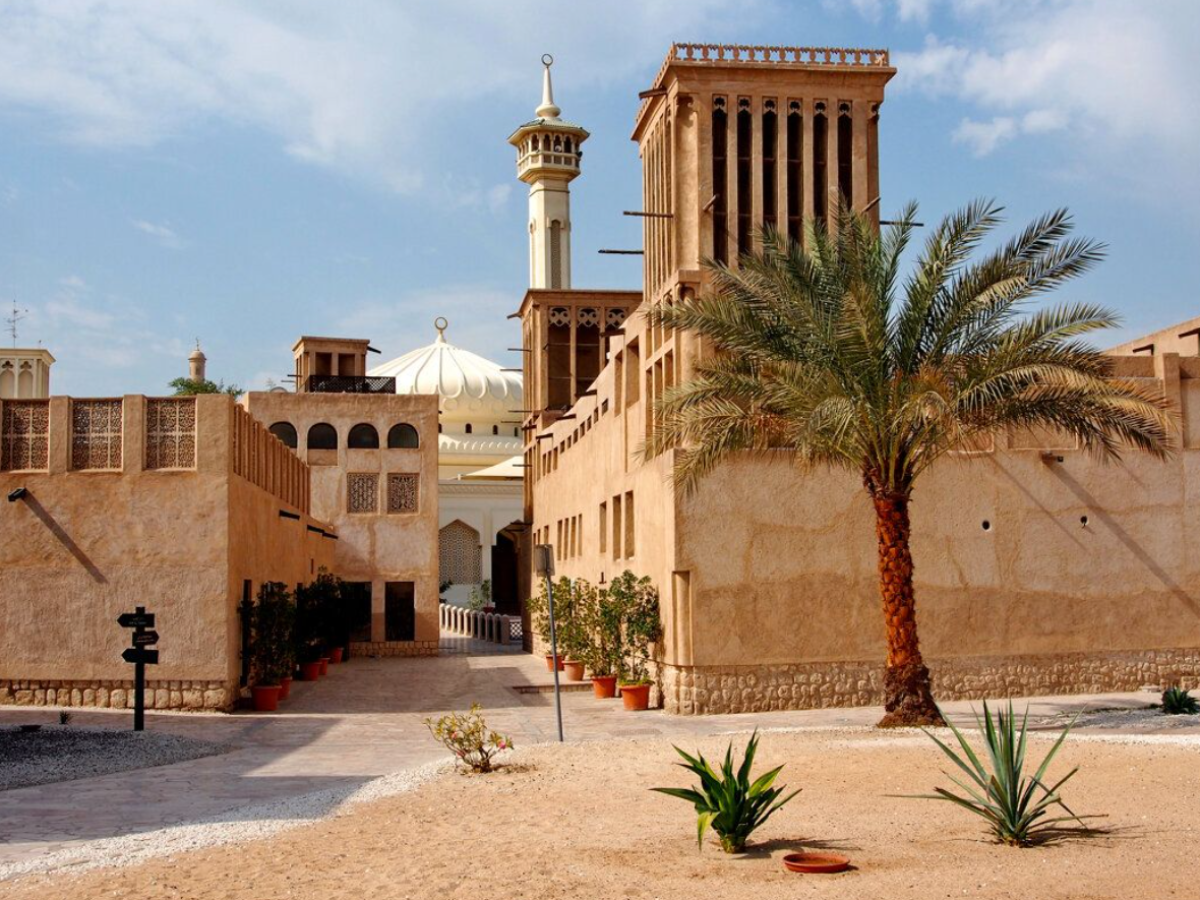
Start at the Al Fahidi metro station and walk into the labyrinth of wind-tower houses that make up Dubai's oldest preserved neighbourhood. During Ramadan, the district takes on an amber glow — lanterns line the narrow lanes, and the XVA Gallery and Arabian Tea House drape their courtyards in Ramadan decorations.
What to notice: The wind towers. These traditional cooling systems — essentially architectural air conditioning — were built before electricity and remain the most elegant engineering solution in the Gulf.
Stop 2: The Cannon at Al Fahidi Fort (6:15pm)
Walk to the Dubai Museum (Al Fahidi Fort), the city's oldest building (1787). Position yourself on the creek-side promenade. At sunset, the Ramadan cannon fires from near the fort. This is the moment — the crack of the cannon, the call to prayer from every mosque, the city breaking its fast simultaneously.
Insider tip: Bring dates and a bottle of water. Break fast with the city. It transforms the walk from tourism into participation.
Stop 3: Abra Crossing to Deira (7:00pm)
After iftar, walk to the abra station at Bur Dubai. The wooden water taxis (AED 1 per crossing) shuttle continuously across the creek. During Ramadan evenings, the creek is at its most beautiful — the dhows are lit, the water reflects the mosque minarets, and the abra driver might offer you tea.
Stop 4: The Spice Souk (7:30pm)
Step off the abra and you're in the Deira Spice Souk. After iftar, the merchants are in generous spirits. This is when you'll be invited to smell, taste, and linger. Buy saffron (AED 15-30 per gram for Iranian saffron), dried lemons (AED 5 per bag), and frankincense (AED 10-20 per bag).
Ramadan special: Look for qamar al-din — dried apricot sheets used to make the quintessential Ramadan drink.
Stop 5: The Gold Souk (8:00pm)
Five minutes' walk from the spice souk. Dubai's Gold Souk contains over 300 shops and during Ramadan, many run special promotions. Even if you're not buying, the visual spectacle is remarkable — entire windows of 22-karat gold, with craftsmen working behind the counters.
Stop 6: Late-Night Street Food in Naif (9:00pm)
Walk south from the Gold Souk into Naif. This is where Ramadan's food culture explodes. Pakistani, Yemeni, Indian, and Afghan restaurants line the streets, most open until 2-3am during the holy month.
Must-try: Yemeni mandi from any of the hole-in-the-wall restaurants on Al Naif Road. A full meal with rice, bread, and slow-cooked meat costs AED 25-35.
Practical Tips
- ◆Wear comfortable shoes. The walk covers 5-6 kilometres on a mix of paved streets and souk alleys.
- ◆Bring cash. The souks are cash economies. Small bills (AED 5, 10, 20) are useful.
- ◆Start before sunset. The pre-iftar atmosphere in Al Fahidi is half the experience.
- ◆Dress modestly. Old Dubai is more conservative than JBR or Marina. Cover shoulders and knees.
- ◆Go on a weekday. Weekends (Friday-Saturday) are significantly more crowded.