The short answer
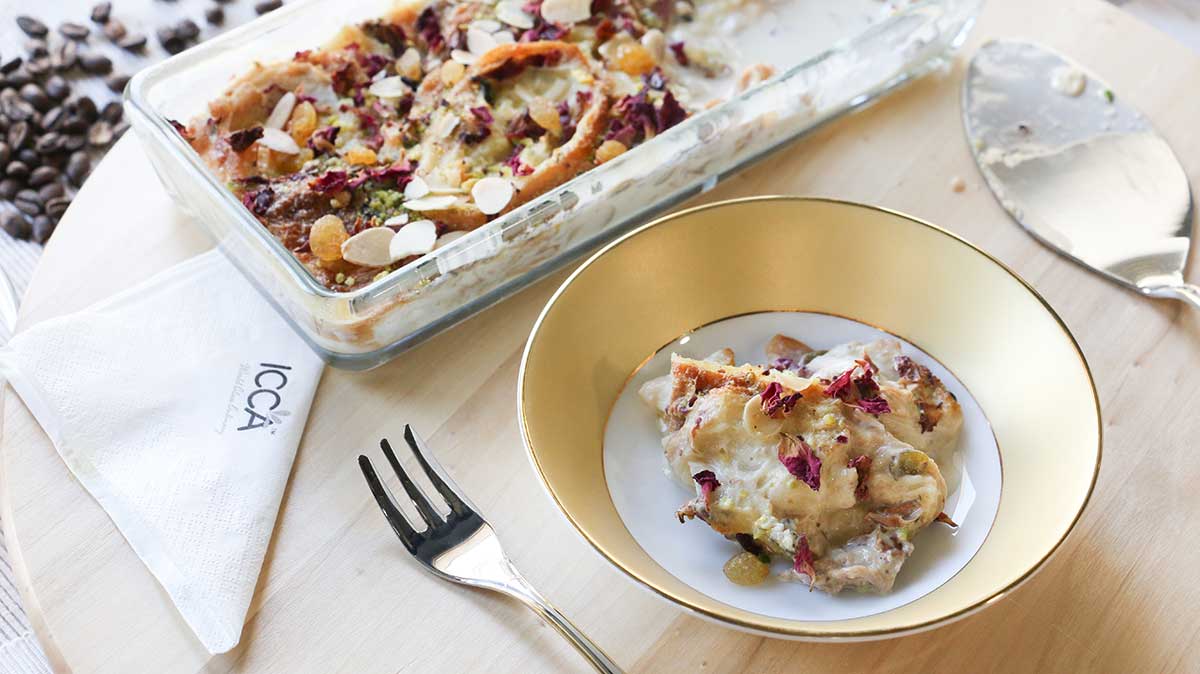
Umm Ali is an Egyptian bread pudding made from layers of puff pastry or bread soaked in sweetened milk, topped with nuts, raisins, and coconut, then baked until golden and bubbling. Its name means 'Mother of Ali' and traces to a Fatimid dynasty legend from 13th-century Egypt. The best Umm Ali in Dubai is served at Al Hadheerah (Bab Al Shams), Arabian Tea House (Al Fahidi), and Logma.
The story begins with a murder. The dessert begins with stale bread.
In 1249, Sultan Aybak of Egypt took a second wife — Shajara al-Durr, one of the most powerful women in medieval Islamic history. His first wife, Umm Ali, seethed. When Aybak was murdered (possibly by Shajara al-Durr, possibly by palace conspirators — the history is conveniently blurry), Umm Ali seized her moment. She had Shajara al-Durr beaten to death with wooden clogs, then ordered the most lavish dessert the palace kitchens could produce to celebrate. The cooks used what they had: stale bread, milk, sugar, nuts.
The dish was distributed to the people of Cairo. It was delicious. It outlived the dynasty.
Eight centuries later, Umm Ali is served at every Ramadan table in Egypt and across the Gulf — a bubbling, cream-soaked bread pudding studded with pistachios, almonds, and raisins, scented with rose water and cinnamon.
What Makes Umm Ali Distinctive
Umm Ali sits at the intersection of comfort food and ceremony. The base is simple — torn puff pastry or bread, soaked in sweetened milk (often a mix of milk and cream), layered with nuts, shredded coconut, and raisins, then baked until the surface blisters and browns.
The magic is in the texture: the top is a crackled crust, the middle is custardy and yielding, and the bottom is soaked almost to the point of dissolution. It arrives at the table in a clay pot, still bubbling, and the smell — butter, rose, toasted coconut — is aggressive in the best possible way.
Unlike kunafa (which demands precision) or luqaimat (which demands speed), Umm Ali is forgiving. It is a home dessert, a grandmother's dessert, the kind of dish that improves when made by someone who doesn't measure anything.
Where to Find the Best Umm Ali in Dubai
Al Hadheerah — Bab Al Shams Desert Resort
Al Hadheerah is an open-air amphitheatre restaurant set in the desert, 45 minutes from Dubai Marina. The Umm Ali here is baked in individual clay pots over open coals, arriving at your table with the cream still bubbling and the edges charred black. The desert setting — silent, star-lit, firelit — makes the experience theatrical in a way that restaurants in the city cannot replicate. AED 45-55 as part of a set menu.
Insider tip: Order it with Arabic coffee, not tea. The bitterness of the coffee cuts through the sweetness of the pudding perfectly.
Arabian Tea House — Al Fahidi
The Arabian Tea House serves Umm Ali in a modest ceramic bowl, unpretentious and generous. Their version uses puff pastry rather than bread, giving it a more layered texture. It's topped with a blizzard of crushed pistachios and a drizzle of rose syrup that pools in the cracks of the crust. AED 32.
Logma — Various Locations
Logma's Umm Ali is the modern Emirati take — served in a cast-iron skillet, the pastry replaced with croissant dough, the toppings including Lotus biscuit crumble. Traditionalists will argue it's not Umm Ali. They're technically right. But it's excellent. AED 38.
Al Bait Al Qadeem — Sharjah Heritage Area
If you're willing to drive 30 minutes from Dubai, Al Bait Al Qadeem in Sharjah's Heart of Sharjah district serves what many Egyptian residents consider the most authentic Umm Ali outside Cairo. The recipe uses actual bread (not pastry), full-fat buffalo milk, and no coconut — the old-school Egyptian way. AED 28.
Umm Ali During Ramadan
During Ramadan, Umm Ali appears on virtually every hotel iftar buffet in the UAE. Most are mediocre — mass-produced, held in warming trays until the custard separates and the nuts turn soggy.
The rule is simple: if the Umm Ali arrives in a clay pot, individual and freshly baked, it's worth eating. If it's scooped from a buffet tray, skip it and order kunafa instead.
The best Ramadan Umm Ali is the one you don't find at a buffet. It's the one an Egyptian colleague brings to the office in a Pyrex dish, still warm from her kitchen, covered in foil, with a handwritten note: "Don't reheat. Eat now."
"My mother says Umm Ali is the only good thing that ever came from jealousy." — Egyptian pastry chef, Dubai