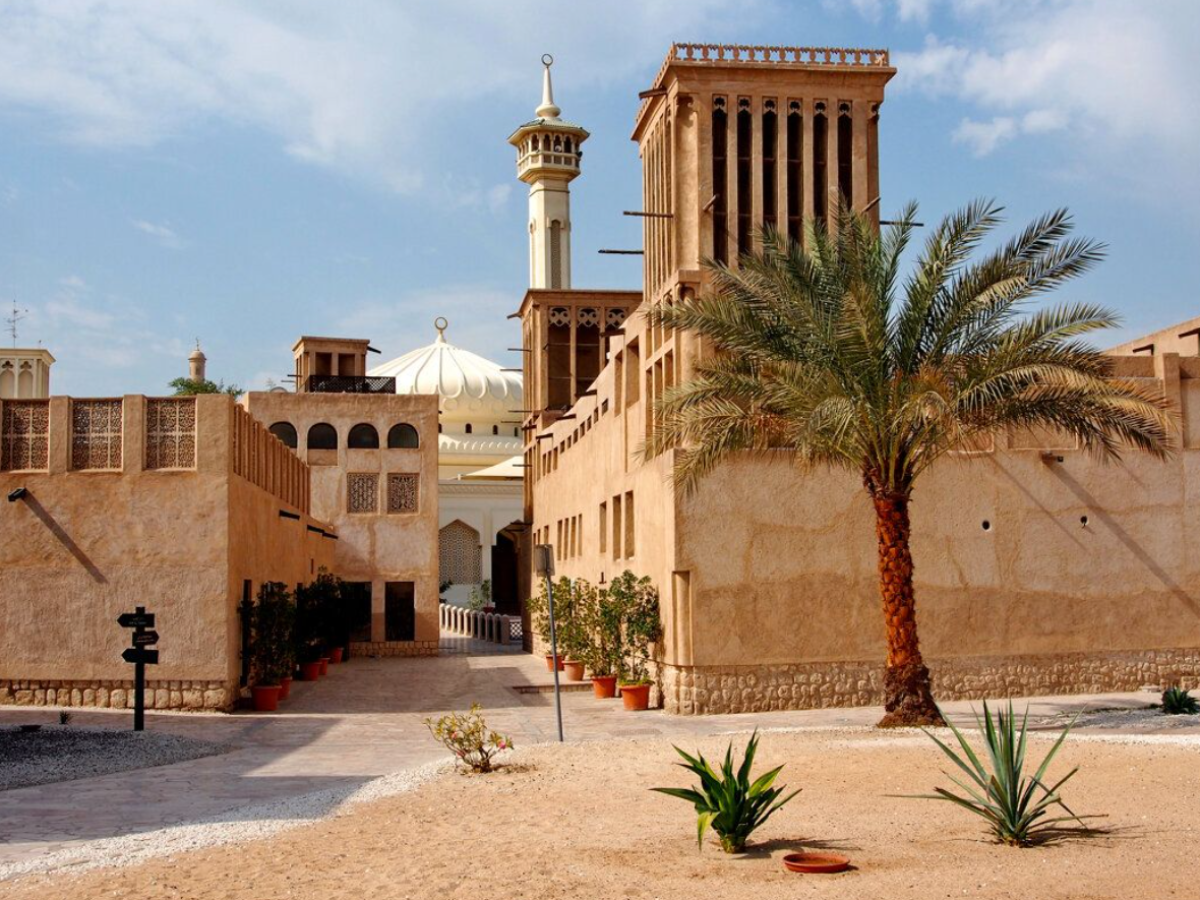
Al Fahidi is the oldest surviving piece of the city, a grid of coral-and-gypsum houses built around wind towers that cooled rooms before air conditioning existed. It sits on the Bur Dubai side of Dubai Creek, and the whole district is walkable in an afternoon — which is exactly how residents treat it: an early morning, a courtyard breakfast, a wander, and out before the heat lands.
Start early, walk the lanes
The lanes are narrow and shaded, which makes this one of the few parts of Dubai that is genuinely pleasant on foot for most of the year. Go before 10am. The light between the wind towers is the reason photographers keep coming back, and the tour groups have not arrived yet.
Cross the creek by abra
The wooden abras that ferry people between Bur Dubai and Deira are still one of the cheapest rides in the city, and still the best view of it. Take one across to the Deira side for the spice and gold souks, then take another back. No booking, no queue — you pay the boatman on board.
Eat like it is 1985
Courtyard cafés here serve Emirati breakfast — balaleet, chebab, regag with cheese — in restored houses rather than hotel dining rooms. This is the part of the city where the food is the history lesson.
What to see
Al Fahidi Fort houses the Dubai Museum, and the district holds small independent galleries, coffee houses and the Sheikh Mohammed Centre for Cultural Understanding, which runs meals and Q&A sessions designed for visitors who want to ask the questions they are too polite to ask elsewhere.
Know before you go
- —Nearest metro: Al Fahidi (Green Line), a short walk from the historic district.
- —Dress modestly — this is a heritage and residential area, not a beach strip.
- —Best months: November to March. In summer, go at sunrise or after dark.
- —Cash is useful for the abra and the souks; cards are not universal there.
Still deciding?
Ask the concierge for a plan built around Old Town & Al Fahidi — dinner, timings and what to book first.
Ask the conciergeKeep reading