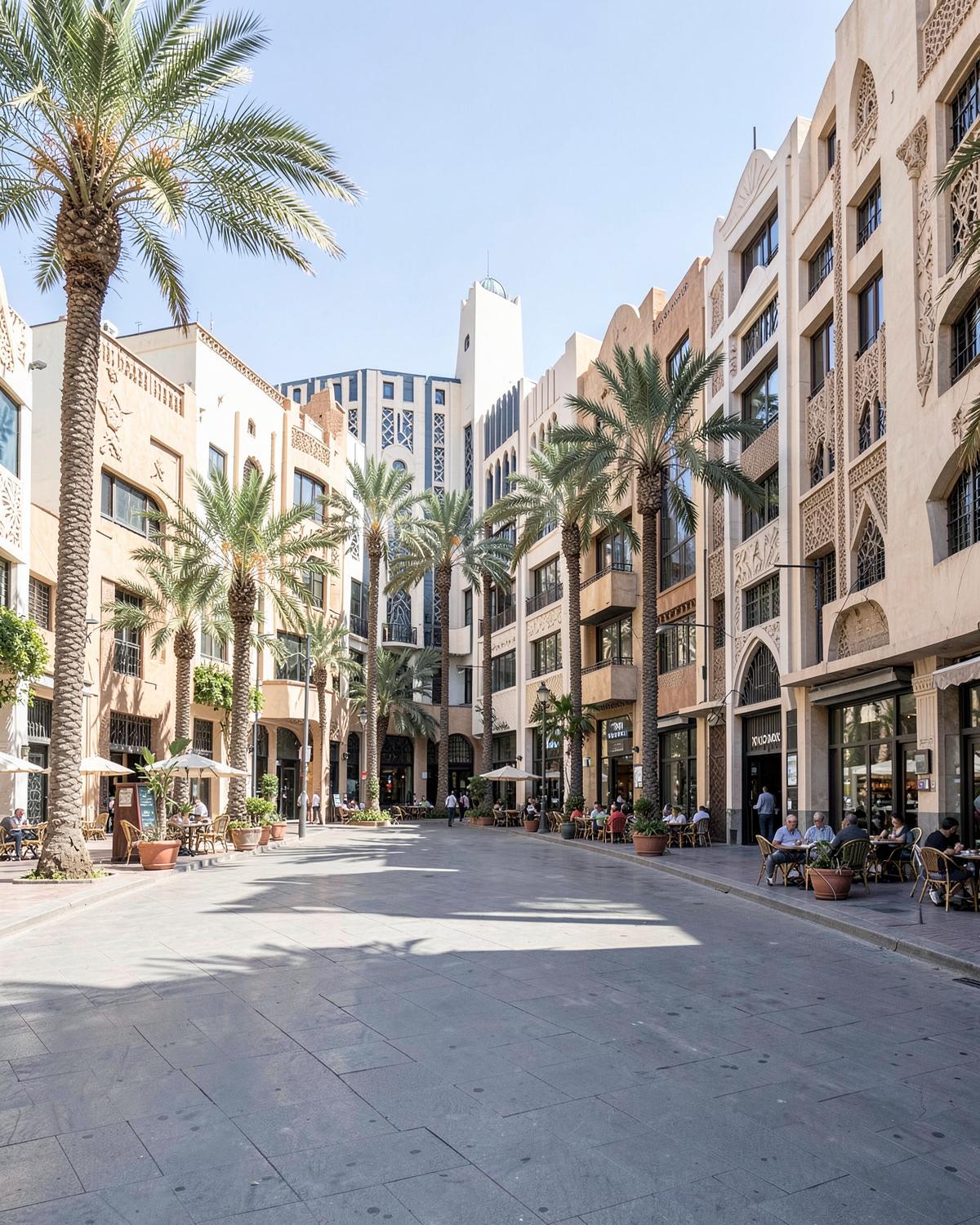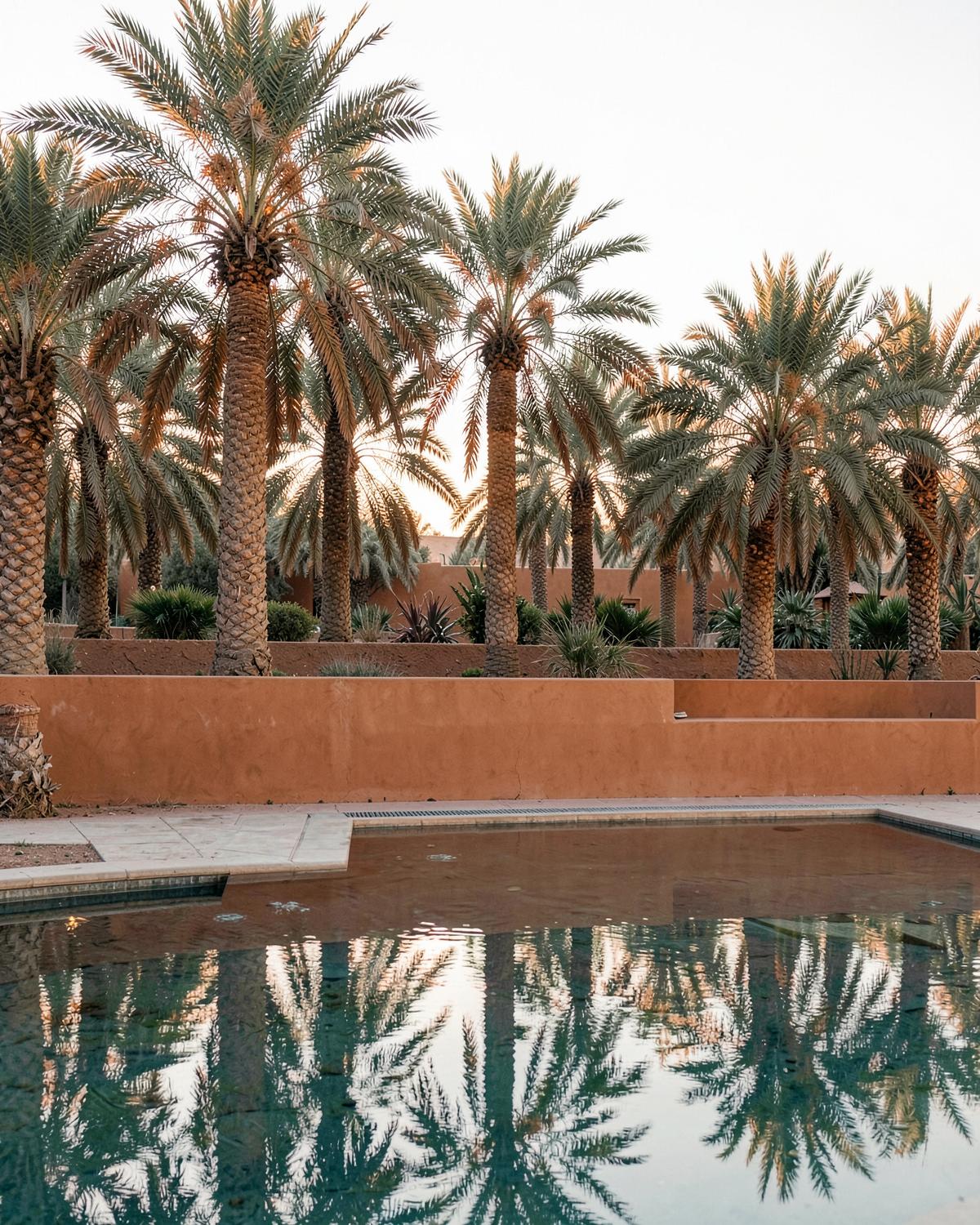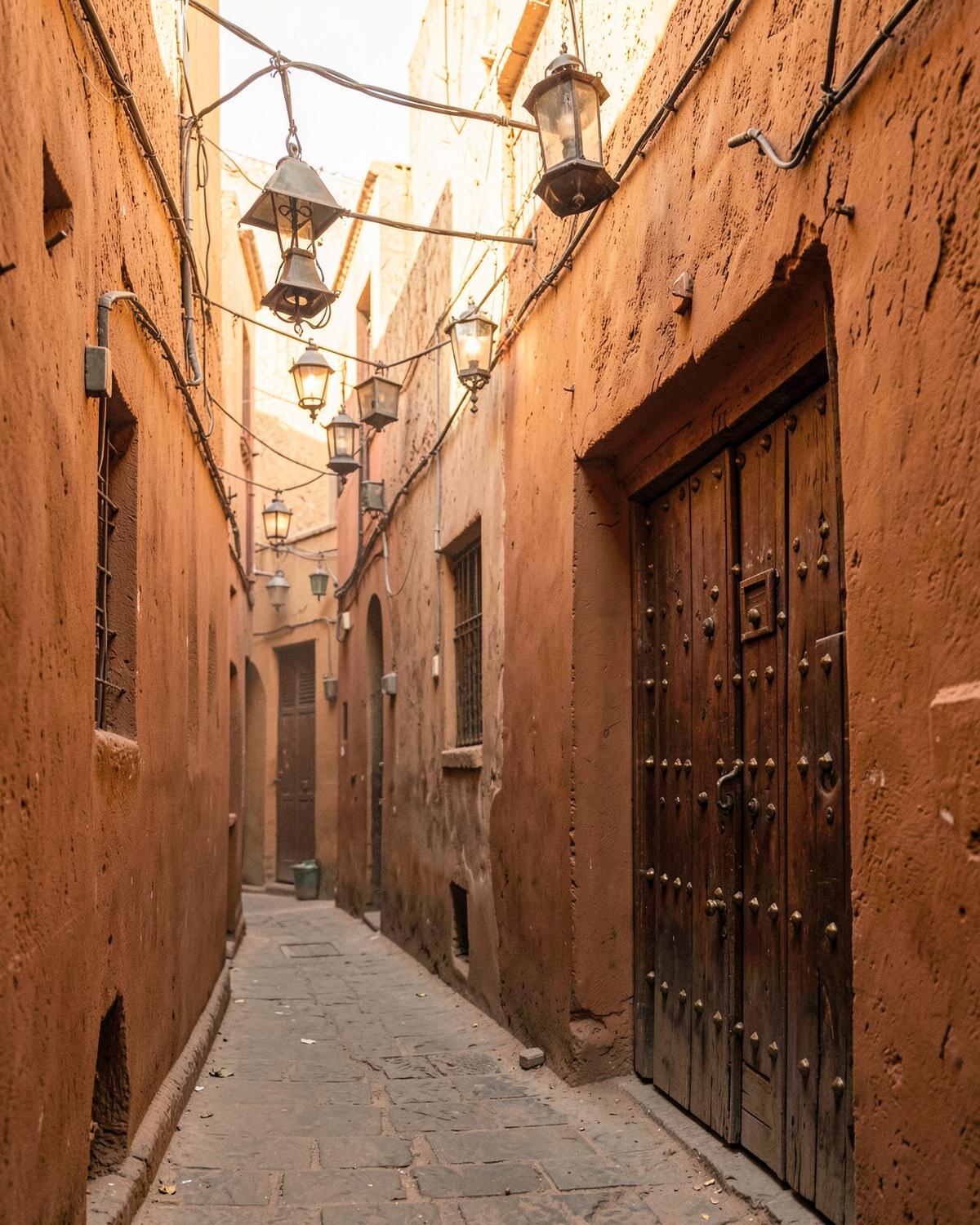
The medina is a UNESCO-listed walled city that still functions as one: no through traffic, no grid, and almost nothing visible from the street. The rewards are behind doors — riad courtyards, restored palaces, gardens you would never guess were there. It is best at either end of the day and hardest in the middle of it.
Jemaa el-Fna changes twice a day
By day the square is orange-juice carts and open space. After sunset it becomes a food market with grills, storytellers and musicians. Both are worth seeing and they are effectively two different places — go once for each.
The souks reward a plan
Rahba Kedima, the old spice square, is a useful anchor: Nomad's rooftop looks straight over it and gives you the layout from above before you go back in at ground level. Rue Mouassine and Souk Sidi Abdelaziz are the two axes most visitors end up using.
Find the gardens and courtyards
Le Jardin Secret, a restored Saadian-era palace garden on Rue Mouassine, and Dar El Bacha, the Glaoui palace now open as a museum, both do the same thing: replace the noise of the lanes with water, tile and shade in about ten steps.
Getting lost is part of it, up to a point
Phone maps work badly in the covered souks. Note the gate you came in by, keep an eye on the Koutoubia minaret when you can see it, and treat a wrong turn as the afternoon's plan rather than a problem.
Know before you go
- Cars stop at the gates. Riads send a cart or a porter for luggage — arrange it in advance.
- Carry small notes; the souks are cash and haggling is normal and expected.
- Dress covering shoulders and knees is the comfortable norm in the old city.
- Friday is couscous day and a slower one; some workshops close for part of it.