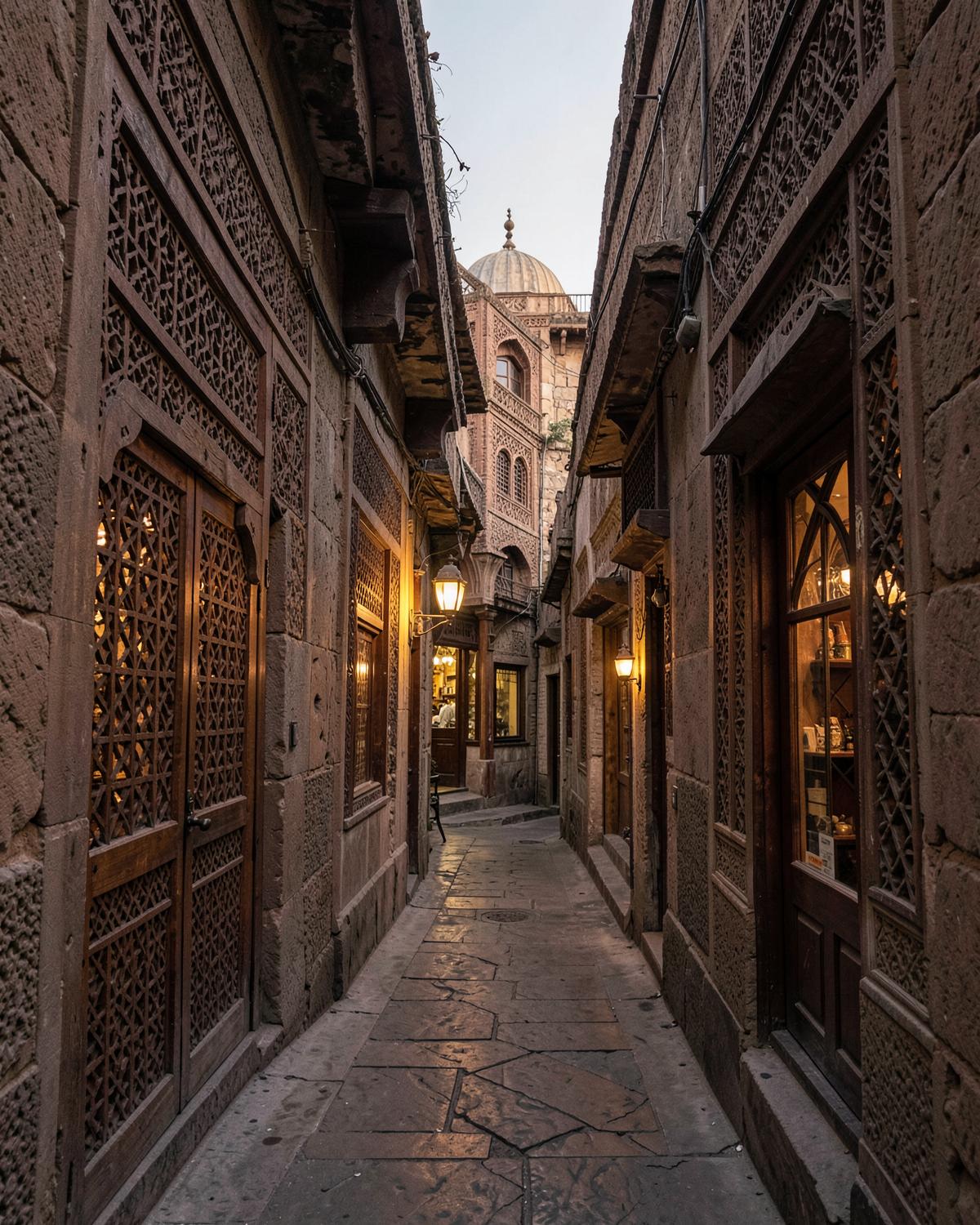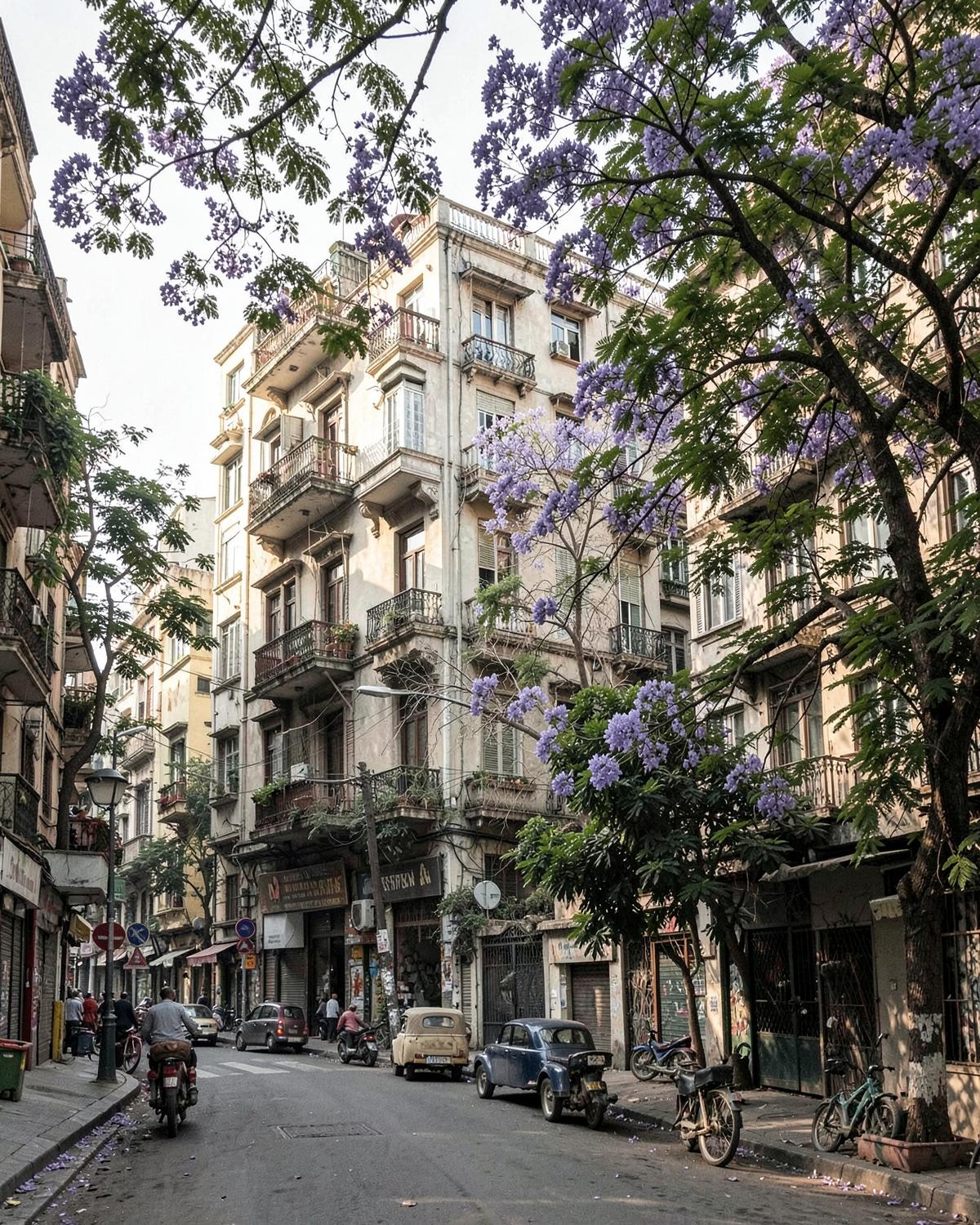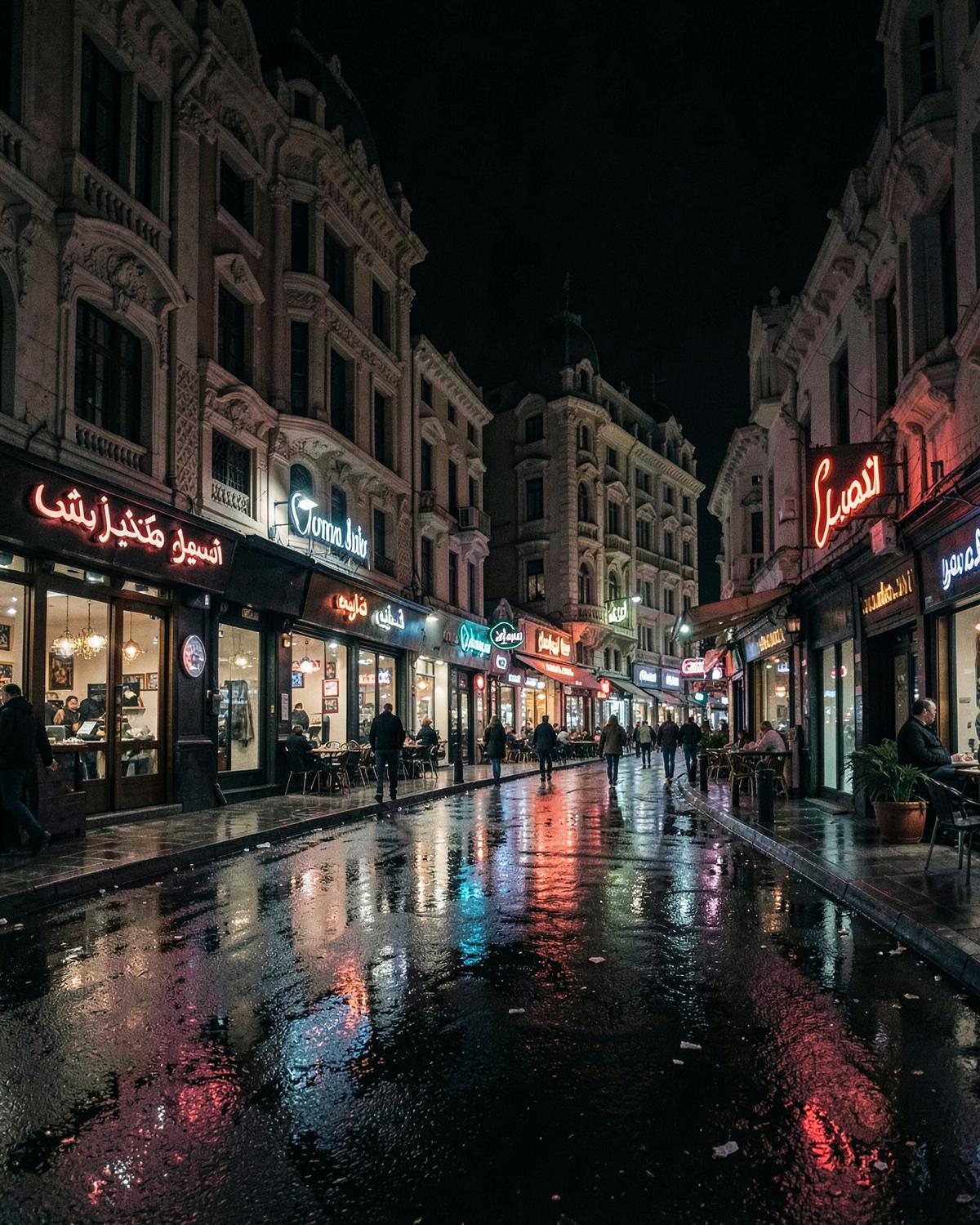
Downtown was built in the 1860s to make Cairo look like Paris, and the bones are still there: wide boulevards, ornate facades, passages and cinemas. It fell out of fashion, filled with offices and stayed authentically itself. Today it holds the city's independent art scene and its oldest surviving bars, in buildings that are slowly being restored.
Look up
Talaat Harb Street and the streets radiating off Talaat Harb Square carry a century of European-influenced architecture at first-floor level and above — ironwork, caryatids, cinema signage. Ground level is ordinary commerce; the interest starts one storey up.
The independent art scene lives here
Townhouse Gallery, founded in 1998, was Egypt's first independent non-profit contemporary art space and set the pattern for the studios and project spaces around it. Openings are informal, free and one of the easiest ways to meet the city's own cultural crowd.
The old bars
El Horreya in Bab El Louk has been serving under high ceilings and strip lighting for more than eighty years, and Estoril sits down an alley off Talaat Harb. Neither is a tourist recreation of old Cairo; both are simply old Cairo, still open.
Best on foot, in the evening
Downtown is one of the few parts of Cairo laid out for walking. Come in the late afternoon for the architecture, stay for dinner, and let the passages and side streets set the route.
Know before you go
- Tahrir Square and the Egyptian Museum are at the western edge — easy to fold into the same walk.
- Licensed bars are legal and long-established here, but discreet: look for the door, not the sign.
- Sadat and Nasser metro stations put you in the middle of it and skip the traffic entirely.
- Weekend evenings are busiest; Monday and Tuesday are the calm nights.