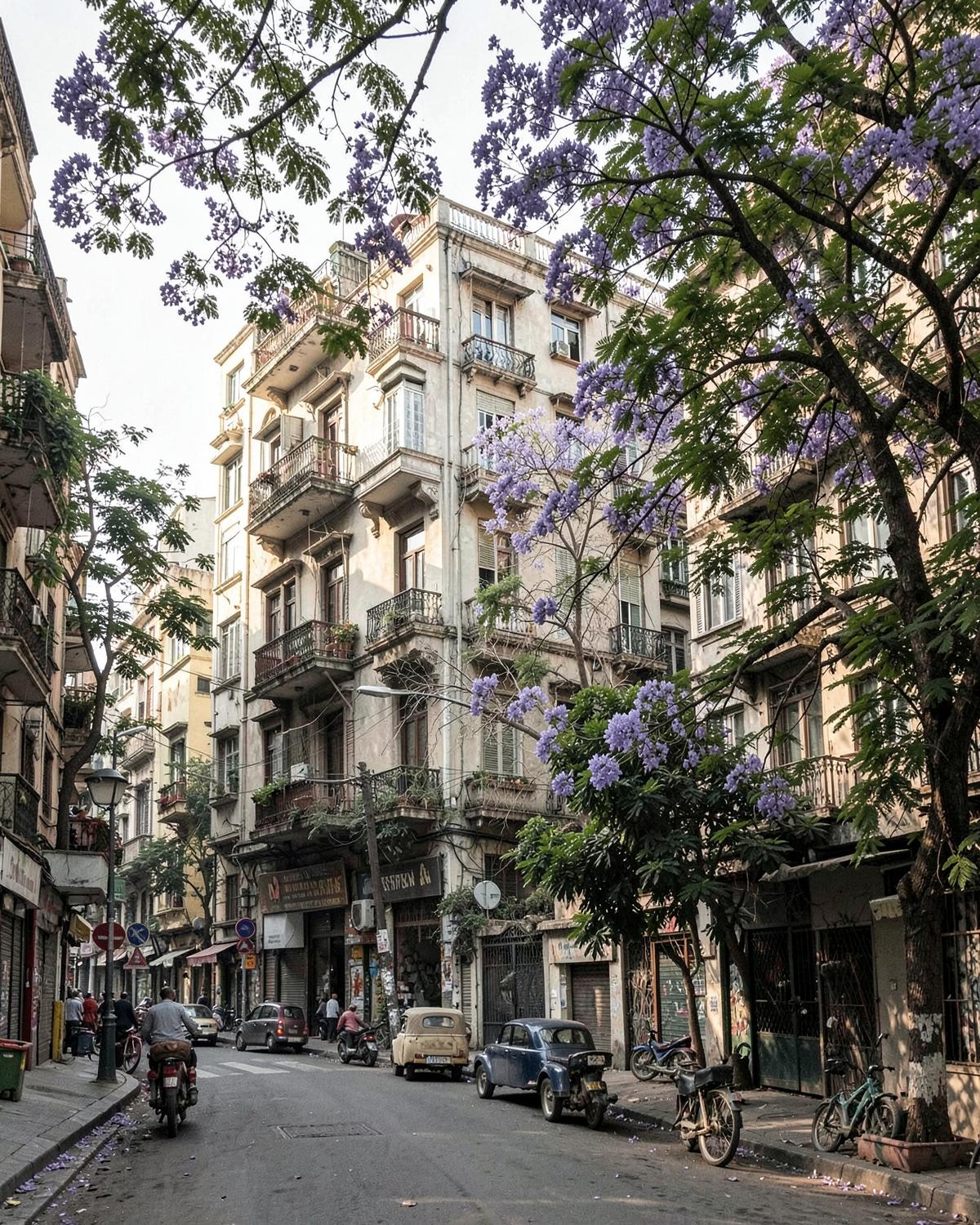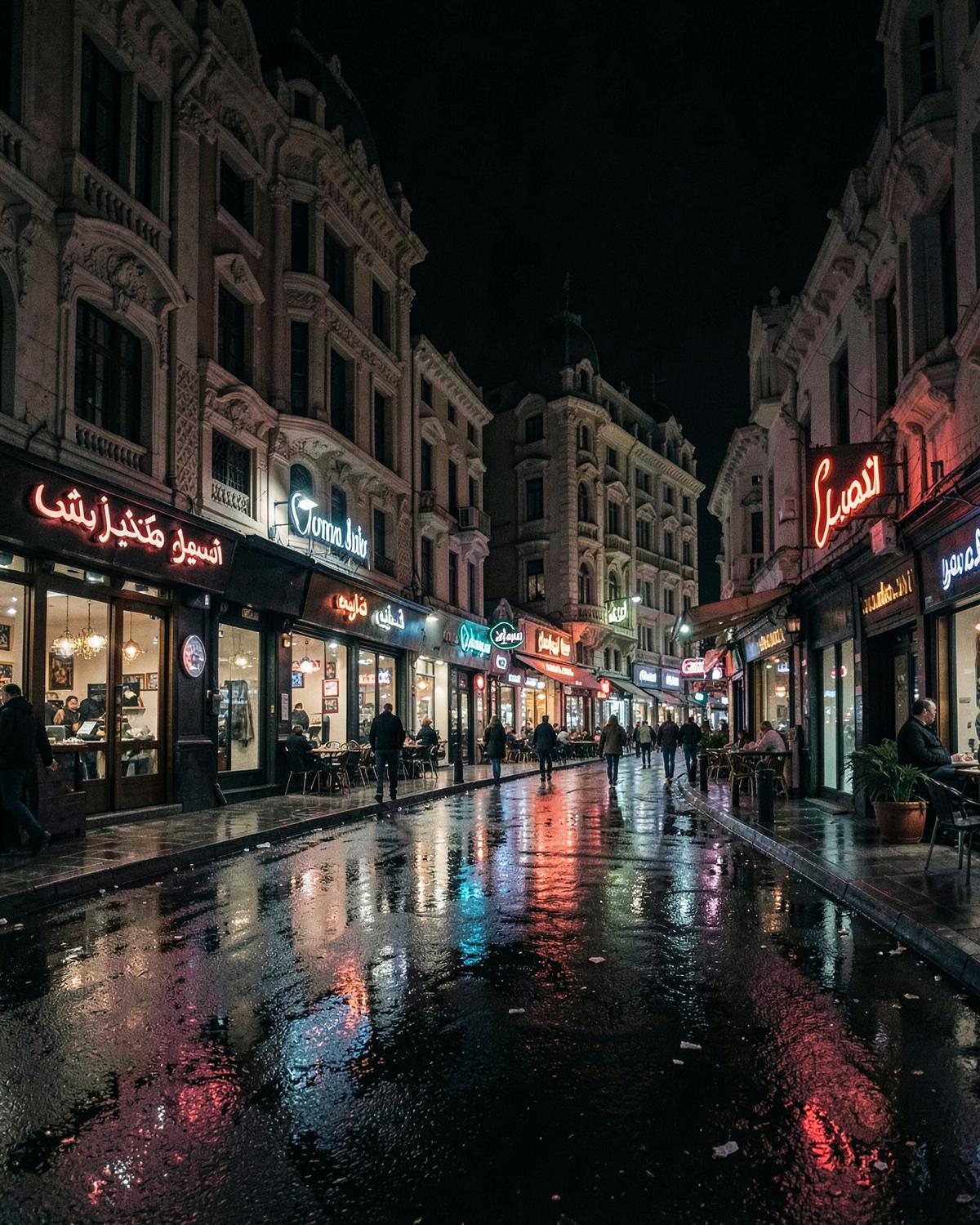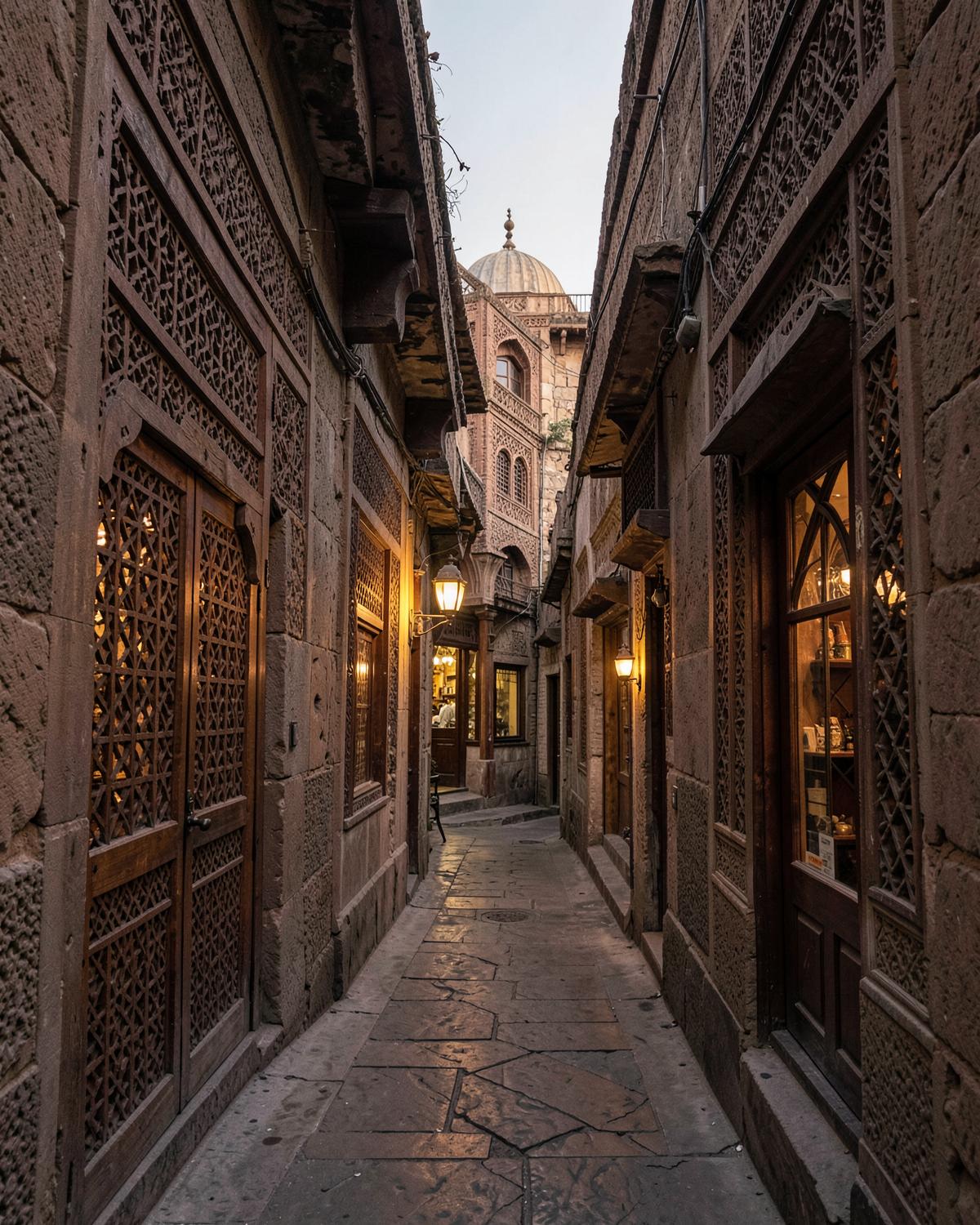
This is the oldest working part of Cairo: the Fatimid and Mamluk city, built up over a thousand years and never turned into a museum piece. Al-Azhar Mosque still teaches, the bazaar still trades, and the monuments along Al-Muizz Street stand between shops rather than behind ropes. Give it an afternoon and an evening rather than a morning.
Walk Al-Muizz from end to end
Al-Muizz li-Din Allah Street is the spine of the medieval city and one of the densest concentrations of Islamic architecture anywhere. Much of it is pedestrianised. Start near Bab Zuweila, walk north, and let the mosques, sabils and madrasas arrive in order rather than trying to tick them off a list.
Khan el-Khalili is two markets
The front lanes near Al-Hussein sell to visitors. Push one or two turns deeper and it becomes the wholesale market Cairenes actually use — copper, textiles, spice, gold. El-Fishawy, open in some form since 1797, sits in the middle of it and is worth a mint tea even when it is busy.
Go late, not early
Monuments open in the morning and the light is good, but the quarter itself comes alive in the late afternoon and evening, when the heat drops and the cafés fill. The compromise most residents make: monuments before noon, tea and the bazaar after five.
Sit in a courtyard
Several restored Mamluk and Ottoman houses are open as cafés and cultural spaces — Beit Zeinab Khatoun beside Al-Azhar is the easiest to find. A courtyard is the only place in this quarter where the noise drops enough to hear yourself think.
Know before you go
- Dress modestly — this is a religious and residential quarter, and several mosques are active places of worship.
- Carry cash in small notes. Most of the bazaar does not take cards.
- Friday mornings are quiet until after midday prayers, then busy.
- Shoes off inside mosques; some ask visitors to wait out prayer times.